What I’m Reading: The Greatest Generation

As if our political differences were not enough, the last few months of 2019 have reintroduced inter-generational conflict into the culture wars. This time the insults come with a new menu of pejoratives, including “OK Boomer” and “Karens” in reference to Gen-Xers. Meanwhile, Generation Z begins to find its voice as my own micro-generation, the Xennials, struggles to break free from what we see as the narrow-mindedness of GenX and the Millennials’ over-dependence on technology. These divisions are somewhat arbitrary and are mainly cultural constructs, but they sure do feel real. I still get defensive whenever people call me a Millennial, even though I technically am one.
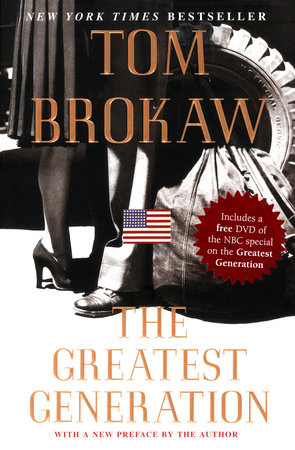
Image result for the greatest generation

As I read Tom Brokaw’s seminal The Greatest Generation, however, I get the sense that just about everyone – including the Greatest Generation folks themselves – understood this cohort to be both above the generational fray and also deserving of their superlative epithet. In effect, that is Brokaw’s thesis – this generation was, quite literally, the greatest. All us whippersnappers should learn something from these folks and try to be less disappointing.

Let’s address that claim in a moment. First, the book itself is extraordinary: it is comprised of dozens of stories from those who served during World War II. From the men who stormed the beaches at Normandy to the women who assisted the Joint Chiefs of Staff in DC, Brokaw casts a wide net and defines the word “service” broadly – and rightfully so. He interviews Japanese internees and African American men and women who served their country despite their nation’s scorn, as well as mechanics, Presidents, and everyone in between. Readers come away with a sense of just how much work, blood, and sacrifice this conflict required. Although the United States was separated from most of the fighting by two vast oceans, Brokaw shows how every nook and cranny of the nation was affected by the conflict. Its urgency was both pervasive and universally compelling, and winning this war was existentially vital to virtually all Americans. It is hard to imagine such a mentality now, but Brokaw manages to convey the mindset through his stories and his brisk prose style.

However, as one might imagine, the book sometimes devolves into hero worship. All of the stories are framed in terms of personal sacrifice, and many of the chapters end with a lament of one sort or another, often about how things in general have changed in the decades since the war. Some complain about “kids these days,” citing how things were “before the war” and what not. Sometimes Brokaw even gets in on the action, asserting at one point that Catholic kids back in the 30s would have been slapped around by their nuns and then by their parents if they had the temerity to complain, but with barely concealed approval. While Brokaw is savvy enough to argue that much of this generation’s good qualities can be attributed to environmental circumstance – namely being raised during an era when good old fashioned family values, Depression-era frugality, and wartime sacrifice were tattooed onto everyones’ conscience – his narrative often circles back to the inherent goodness of the people who served their country during the War. And as a historian I get hives at the mere thought that some special, indefinable quality somehow made anyone born between Armistice Day and Lindbergh’s solo flight across the Atlantic superior to all who came before or since. After all, even Greatest Generation Americans were human . . . they put their pants on one leg at a time, just like everyone else.

This criticism should not imply that the “Greatest Generation” was not great, or that its members did not deserve such high praise. After all, I am writing a book that, if I’m being honest about this project, is going to heap a great deal of praise on my WWII-veteran grandfather. Much of that praise, though probably not all of it, will be warranted. But the difference between history and hagiography bears consideration: the former explains, the latter venerates.

Perhaps in some ways the “Greatest Generation” motif is the logical result of our very opposite view of Nazis, who are and who remain (at least for most of us who don’t lead sad lives complaining about girls on the dark web in our mothers’ basements) history’s greatest villains. Certainly no other generation of wartime opponents is more deserving of everlasting contempt than the Nazis. It makes sense, then, that only an incorruptible and selfless Greatest Generation could beat a Third Reich with no moral scruples and a nine-year head start. I don’t believe this means we need to abandon our judgments about Nazis and start saying nice things about them*, but we should remind ourselves that just as there were probably some bad Americans who fought the good fight, there were probably also Germans who made terrible mistakes out of self-preservation and cowardice.

In any case, I don’t believe that this book’s epilogue has been written yet. At some point humanity is going to have to contend with the consequences of climate change, and the longer we all collectively wait, the worse it is going to be for our future selves and our descendants. It already seems increasingly unlikely that my daughter will ever see a glacier south of the Arctic Circle, enjoy a river cruise through the Amazonian rainforest, or visit Manhattan’s Battery Park without scuba gear. She is going to have to deal with some stuff, while all the Boomers and Karens and Oregon Trail-obsessed Xennials decompose in cemeteries that should probably be trees and homes. I don’t envy her, and for that same reason I don’t envy the Greatest Generation. They did what they had to do for their country and for freedom, without complaint, and without expectation of reward, and we will forever be in their debt. Accordingly, at some point climate change will stop being something we “should” act on, and will quickly and inexorably morph into something that requires action and mobilization if we are to survive. I hope that Generation Z and whatever-letter-we’re-up-to-now generation my daughter belongs to rises to the challenge, because folks my age and above sure aren’t. And when they do, I hope some future Tom Brokaw writes a fawning book about them, too.

If I’m alive to see it, I promise I won’t argue, and will quietly go back to dying of dysentery in Oregon Trail for the 10-millionth time. Meanwhile, if anyone today is looking for an instructive or inspirational example of what an entire generation is capable of when they collectively put their minds towards doing something, this book will do the trick.

*The Autobahn, a Nazi Germany invention, is the only thing I can think of . . . but it is significant enough that I immediately thought of it. Since I enjoy driving fast when trying to cross vast stretches of nowhere, I admit to my shame that I am thankful for this one silver lining.

The Plan for December and Beyond

We are now nearing the end of our month-by-month letter analysis series. In fact, next Wednesday’s post on November 1941 (just in time for Thanksgiving!) will be the last for a while.

I am going to change things up a bit for December: instead of posting my writing based on the letters, I am going to post the December 1941 letters themselves, on the days when they were written (e.g., a December 17th letter will be posted on December 17th). On the morning of December 7th I will post an excerpt from my book project in which I describe the attack on Pearl Harbor and Elmer’s recollections from that day. Later in the month (after Christmas sometime) I will write a December 1941 post reflecting on the attack and on the days that followed, and on the 31st I will post about Grandpa’s 1941 Near Year’s celebration in San Diego, which was eventful and interesting for a number of reasons.

I am still working out how to approach this material in the new year. I plan on immediately diving into Elmer’s 1942 correspondence, but the pacing will be different because his letters following the attack on Pearl Harbor are much shorter. This is not for want of things to talk about, but because Naval censors took seriously the old warning, “loose lips sink ships.” Then sometime around Valentine’s Day I will begin introducing you all to a tranche of letters I have barely even touched yet: Elmer’s love letters to his future wife, Rose, and the letters he received from her in turn.

In addition to all that, I hope to have news to report about my forthcoming book on horse stealing, including cover art, during the first few months of the year. This summer I will begin to pivot more towards that project as its release date gets closer. I also hope to have some exciting updates about my documentary project, Earthshaking.

In the meantime, my winter break is coming up, and I am very much looking forward to having some time to catch up on project reading and also crank out some writing for this manuscript. That means more book reviews are coming.

Thanks for your patience . . . and thank you as always for reading!

Best,
Matt

Movie Review: Midway

It was about 9:40pm when I approached my wife. I had just woken up from a 90 minute nap (which happens when your 2-year-old daughter demands that you lie down near her in the adult-sized daybed as she is trying to sleep), so I was already groggy when I told her that I was going to attend a 10:25 showing of Midway that night. “OK.,” she chuckled.

“I’m doing it for the blog!” I maintained, perhaps a bit too insistently.

She laughed again. “Sure.”

I had already asked her a few days earlier if she would want to see it with me, and based on the conversation that followed it seemed that neither one of us expected a whole lot. After all, Roland Emmerich isn’t exactly known for his artistic nuance. Watching aliens blow up major cities in Independence Day is one thing, but trusting him with a war epic and perhaps the single most important naval battle in American history? That’s a tall order for anyone. Nevertheless, I wanted to see how the guy who blew up a scale model of the White House with a spaceship would treat four ill-fated Japanese carriers.

Image result for midway theater poster

For starters – and perhaps this comes as a disappointment to some of you – I cannot comment too readily on the film’s historical accuracy. There are two main reasons for this. First, my “expertise” does not encompass the Battle of Midway, and most of what I know comes from general descriptions of the battle. Secondly, I decided to suspend disbelief early on, once I realized that the Japanese torpedo bombers attacking Battleship Row at Pearl Harbor (the December 7th attack is depicted within the first five minutes of the movie) were moving in from the southwest, and not from the northwest and due north. I also noticed that there were no ships anchored where the Chew and the Allen were supposed to be located – an omission that rankled me a bit (and which, understandably, would have upset my grandfather). Once the film moved past the events of December 7th and into 1942, I figured that the movie would be more easily digestible if I watched it as it was probably intended to be seen: as a “based on a true story” Emmerich disaster flick, and not as a documentary.

When seen on its own merits, Midway holds up fairly well as a war movie. For one, Emmerich’s ensemble cast of characters (including Admiral Chester Nimitz, Japanese Marshal Admiral Isoroku Yamamoto, Lt. Commander Richard Best, and Rear Admiral Edwin Layton) are all compelling in their own right and could easily inspire their own biopics. As for the plot, Emmerich is smart to begin the movie with the attack on Pearl Harbor and to end it with Midway. While I don’t think the script properly conveys just how poorly the war effort had been going for the United States throughout the first half of 1942, in general it does a good job of narrating the sequence of events that span the United States military’s failure to predict the attack on Pearl Harbor with its inspired and fortuitous counterstroke at Midway.

More importantly, I think Emmerich recognized a problem that many war movies about air raids have, which is that they often occurred so quickly that it would be impossible to make a movie about them without including lots of filler. This issue has plagued film reenactments of the attack on Pearl Harbor, which in real time lasted less than two hours from start to finish. Tora! Tora! Tora! tried to solve this problem by devoting most of its screen time to the events leading up to the attack, while Michael Bay’s Pearl Harbor (2001) focused primarily on a love triangle. Neither film successfully balances the intensity of the attack with the relative quiet of the days, weeks, and months preceding it. In Midway, however, the attack on Pearl Harbor provides exposition, not climax, while the namesake battle begins at the start of the screenplay’s third act. This was a clever way to frame the film around its comparatively short action sequences.

That being said, the dialogue could use a lot of work. Most of the characters speak like, well, the people in Independence Day. There are lots of New Jersey accents, platitudes about duty and winning and what not, and an endless stream of tropes (like references by Japanese commanders to being ordered to stand “like samurai.”) The characters just don’t seem to talk like normal people. In fact, I’m positive that Admiral Halsey spent a lot more time complaining about his shingles than he let on in the film.

Also, as other reviewers have stated, the film’s use of CGI is a bit overwhelming. It is one thing to depict a ship blowing up; it is another thing entirely to have Best fly his bomber through the explosion caused by one of his own bombs. These whiz-bang moments don’t really add much to the drama, but instead muddle the narrative with endless special effects distractions. Perhaps this is where Emmerich’s resume becomes a liability. History, when told truthfully and with an ear for good storytelling, does not need disaster filmmaking to engage the audience’s interest.

Aside from these concerns, however, the movie overall was pretty good. While it does not compare to more inspired war films in recent years (like the masterful Dunkirk), it is a classic action war movie. I enjoyed it, and if you plan on seeing it, I would definitely recommend checking it out at the theater. Even if you can only make it to the 10:25pm showing, and you have to grab a cup of coffee first to get through it.

In Honor of Veteran’s Day

Hi folks,
Today is Veteran’s Day, so I would like to give a shout-out to all of this blog’s readers and to everyone else who has served our country.

In particular, I would like to thank my dad, brother, and uncle, who all served in the United States Navy. With my grandpa, that makes three generations of Luckett sailors. Thanks also to my uncles on the Smith side who served in the Air Force, and to my cousins on both sides who have served, including my first cousin once-removed Logan, who is now at Marine boot camp. I am sure I speak for the rest of a grateful nation when I say thank you for your service.

If anyone is interested in the history of Veteran’s Day, here is a great article on the subject: https://www.va.gov/opa/vetsday/vetdayhistory.asp

Also, if you are in a giving mood this Veteran’s Day, please consider donating to one of the many fine charities that helps veterans and their families. This year I made a donation to Give an Hour, which connects veterans and other trauma survivors with mental health professionals. The idea is to give veterans, shooting survivors, and others who need it access to free professional mental health, and in the process destigmatize counseling and psychiatric services. If you are interested in checking out what they do, please visit their website at https://giveanhour.org/. You can easily make a donation through their website.

Anyhow, I hope that everyone is having a great Veteran’s Day!

Best,
Matt

An Interior Border Love Song

Between travel and midterms grading I will not be able to post a book review this week. Instead, I have posted the talk that I gave a few weeks ago at the Western History Association Conference in Las Vegas. It was for a panel discussion of Jon Lauck’s The Interior Borderlands: Regional Identity in the Midwest and Great Plains, for which I contributed a chapter (you can check out the book on Amazon or at the Center for Great Plains Studies Online Shop). I hope that no one minds the gratuitous references to early 90s music or cow butts. Have a great weekend! – Matt

This past summer marked the 25th anniversary of the album Purple by Stone Temple Pilots. This was one of the cornerstone albums of my youth, so I’ve been thinking it about it some over the past few months. My favorite track on the album, and probably one of the most popular songs from the 90s overall, is “Interstate Love Song.” While the lyrics themselves are about, according to Scott Weiland, “honesty, lack of honesty, and . . .  heroin],” the song’s title in my fourteen-year old brain became associated with . . . well, the Interstate. And the specific image it brings to mind for me is from a road trip my family took in the spring of 1995. My brother and I piled into the backseat of my parent’s Ford Escort – not the best car choice in the world for a family with two teenage boys, but it wasn’t my call – and we drove from our home in St. Louis to Colorado Springs. I had never traveled west of Springfield, Missouri before that trip, and I’d never seen what folks in the West would call “mountains.”

Anyway, while my parents kept scanning the radio dial for the strongest oldies stations, I fortunately had a Walkman, and a mix tape I made from the radio which had, among other tracks, “Interstate Love Song.” And now, as I think back on that song, and as much as that song and that album for me provided the soundtrack for my early teenage years, the first and last image that comes into my mind when I hear it today is this: the flat, level horizon of the west Kansas prairie along Interstate 70. And me thinking that, somewhere between Topeka and Hays, we had entered someplace new. The rolling hills of Missouri and eastern Kansas were gone. The trees were gone. The curves in the road were gone. And I remember just staring at that distant green horizon, knowing but not quite understanding either the song lyrics or the fact that we had left the Midwest and had entered the Great Plains. 

Kansas from a car window, 1995. Photo by M. Luckett.

This nebulous, invisible border between the two stands in stark contrast to what we found when we arrived in Colorado: the Rocky Mountains rising abruptly and sharply from the prairies below. Flying over the Front Range, you can even see the sudden uplift of the first foothills beginning in peoples’ backyards!

Front Range, Colorado Springs, 1995. Photo by M. Luckett.

But for most people traveling east to west, the eastern border of the Plains is less perceptible. It was even less so for the hundreds of thousands of migrants who made the trip on foot, on wagons, or on horseback. The border was experienced and usually noticed after the fact: alkali water, less interesting terrain, less shade, different animals, taller grass, even more annoying insects. Trail diaries and memoirs are a fantastic resource for getting a sense of where migrants believed this border lay. Of course, these recollections lack the specificity and certainly of Stephen Long’s 1820 expedition report in which he infamously characterized Nebraska as a “Great Desert,” or John Wesley Powell’s claim in 1878 that the 100th Meridian provides a clean and intuitive border between the arid Plains and the more agriculturally suitable Midwest. Many Western Historians – including me – have satisfied ourselves with these so-called official explanations, and have used them to frame both contemporary experiences as well as our own, making them more intelligible and perhaps less surreal. But trail diaries and official reports both lack a broader, dynamic sense of not only where this so-called border lies, but how it changes over time, and how the ecological, agricultural, and geographic borderland it anchors between the two regions affects the evolution and development of communities, institutions, language, and even the stories we tell about how we won the West. 

Selfie from one of my more recent journeys (2016) through the Great Plains. Taken at the 100th Meridian line in Cozad, Nebraska. Photo by M. Luckett

This book, Interior Borderlands, goes a long way in expanding the ways in which we think about this border by treating it as a borderland zone in its own right. And borderland zones are both fascinating and essential in that they force us to think critically and creatively about how borders and transitional zones affect historical change. This book and the breadth of ways in which its authors approach and treat both the border’s definitions and its impact on surrounding peoples, cultures, and economies has already influenced at least one historian’s approach to the middle border: my own. 

Of course, credit for this change lies outside of my own contribution to the volume. The chapter I included for this book utilizes several advertising tracts I found at the Huntington while researching my book on horse stealing in Nebraska These brochures were created by ranch and railroad companies trying to sell off their massive Great Plains land holdings. These tracts were fascinating, providing a wide variety of exaggerations and distortions about the arability of the lands for sale. Yet unlike Scott Weiland in “Interstate Love Song,” who expresses genuine remorse for misleading his girlfriend about his heroin habit, these pamphlets almost exulted in their lies. As a result, the growing desperation and hyperbole that characterized land sales in western Nebraska created a kind of real estate borderland there, where the aridity of the climate in that region forced sellers to either oversell the land’s benefits or, in the case of some less unscrupulous sellers, propose practical solutions to maximize profit, like growing alfalfa or supporting bonded irrigation districts.

Welcome sign at the Grant County, Nebraska border. Grant County is unapologetically and unambiguously ranching country. Photo by M. Luckett

But while I confess to using some of my unused dissertation research for this chapter, once this book came out earlier this year it spurred me to think differently about my research on horse stealing in western Nebraska along the 100th Meridian. Specifically, it helped me recognize a fact that has eluded me for ten years: that the interior border between the Plains and the Midwest not only affects the distribution of stock grower associations and anti-horse thief associations, but the absence of the latter west of that border dramatically impacts how farmers view the morality and necessity of violent vigilantism. 

Stock grower organizations brought self-imposed regulation to the once wild-and-wooly range where ranchers could steal from one another, but could not chase rustlers far beyond their own territory. Unlike the homesteaders and settlers who employed vigilante rhetoric to make up for the perceived inadequacies of law enforcement, ranchers relied on an individualistic, libertarian ethos and rhetoric that fought federal range regulation on the one hand, while promoting advances in veterinary science on the other. Much of this stemmed from the ranchers’ original goal of banding together and busting up the gangs of horse thieves and cattle rustlers that once preyed on their ranches.

Art by H.M. Wilder from the eBook THE VOYAGE OF THE RATTLETRAP by Hayden Carruth. Taken from https://equinequickresponse.wordpress.com/2013/12/25/the-anti-horse-thief-association-circa-1863-1939/

While the inspiration for stock-grower associations came from Texas and Mexico, farmers’ organized responses to horse stealing could be found further east. After the Civil War, hundreds of thousands of farmers across the Midwest joined local, state, and even national anti-horse-thief societies. Similar in organization to stock-grower associations, these groups usually collected dues for income, relied on an executive committee to disseminate stolen horse information and pursue thieves, and often filed articles of incorporation and formally adopted constitutions with county and state authorities. 

Unlike their western counterparts, however, anti-horse-thief associations borrowed heavily from the Freemasons. Members usually gathered in secret and often incorporated rituals into their meetings. These societies grew quickly and over a wide area because anti-horse-thief societies were a tailor-made response to horse stealing. They channeled the concerns of worried farmers across the Midwest, alleviated anxieties over inefficacious law enforcement, and in general expressed the precariousness of the postbellum agricultural economy. 

Despite the popularity of anti-horse thief societies across the Midwest, western Nebraskans expressed little enthusiasm for the idea. This was likely because the conditions that made homesteading in western Nebraska so difficult overall—namely poor rainfall—prompted many sodbusters to leave the state before they had firmed up their land patents. Farmers often moved into and out of townships, creating demographic and population turnover and resulting in the more economically successful and socially connected people in most communities throughout the region being ranchers, not farmers. Homesteaders in Nebraska had common cause with one another, but because too few people stayed on their claims long enough to build stable communities they could not effectively direct their anxieties into productive group-building. This explains why stock-growers’ associations were the primary organizational tool in the region for combatting rustlers and horse thieves, as well as why homesteaders and other farmers in western Nebraska often embraced violent solutions and rhetoric when dealing with horse thieves. 

Anti-horse Thief Associations were typically governed by constitutions and other documents. Some even filed articles of incorporation. From Kansas Historical Society (https://www.kshs.org/km/items/view/226300)

At any rate, in spite of both my own participation in this project and this book’s influence on my own work since it came out, I don’t really believe that the book satisfactorily answers its own question of where this middle border lies. But I don’t think it needs too. Perhaps the interior border is, above all else, impressionistic, biographical, even visceral. The very amorphousness of it demands that we interpret it experientially, though the prism of our own stories and aspirations, which in turn gives it power. It’s why the legendary Canadian rock band The Tragically Hip’s aptly-named song “At the Hundredth Meridian” conjures up such vivid imagery in its lyrics: 

Driving down a corduroy road (crashing through the window)
Weeds standing shoulder-high (through the window)
Ferris wheel is rusting off in the distance
At the hundredth meridian
Where the Great Plains begin

The Tragically Hip, “At the Hundredth Meridian”

And it’s probably why “Interstate Love Song” resonates with me so many years later. Not because of the topical appropriateness of the lyrics I heard through my headphones, but because of the strange, sublime, incomprehensible, and unforgettable beauty of what I was seeing for the first time outside my car window. 

The giant cow outside the Sirloin Stockade in Abilene, Kansas. Photo by M. Luckett
When I was 14 I thought that this was hilarious for some reason. And considering how expensive film was back then, I guess it still is. Photo by M. Luckett.

Sad news and travel update

So, the only way I can keep up with this site is to write my posts in advance and program them to drop throughout the week. That includes my most recent post today about Saint Louis.

Unfortunately, since I wrote this we learned that my uncle, William Marion Smith of Barnhart, Missouri, passed away yesterday at the age of 89. Funeral arrangements have been made at the Kutis Funeral Home in Lemay for this coming Friday.

While professional commitments, family obligations, and (most recently) health problems in California have too often kept me from attending family funerals during the last several years, I do plan on attending this one.

If anyone needs any more information or needs to get in touch with me, please send me an email or get a hold of me through my contact page.

I am still planning on retrieving the aforementioned documents, but I will post about them probably next week sometime. In the meantime, if anyone would like to write a guest blog for Friday, please let me know and I will upload it. And please come back on Wednesday to read the latest post in my month-by-month series leading up to the Pearl Harbor attack. We’re up to August now…

Anyway, thanks for your understanding, and have a great week.

Best,
Matt

This Weekend: Going to St. Louis

On Thursday morning we are going to fly to Saint Louis for a few days, partly to make up for me not bringing our daughter there over the summer due to my health issues, and partly because autumn is probably the best (read: least miserable) time to visit Missouri. I say this with all the love in the world, but, between the freezing cold temperatures in the winter, the summer humidity, and the insane pollen counts in the spring, Saint Louis doesn’t leave many options for nice, comfortable, allergy-free weather.

At any rate, I am looking forward to visiting with family, eating toasted ravioli, and getting some work done on this project. Specifically, on Friday I will visit the National Personnel Records Center (NPRC) in northern St. Louis County. This is where you would want to go to get the personnel records for anyone who served in the Armed Forces during World War II. In fact, it is as far as I know the ONLY place to go – this is the federal repository for these records. I’m bringing with me a short list of people to look up, including grandpa (of course), my grandmother (who worked for the government during the war), and several of my grandpa’s shipmates.

The NPRC campus in St. Louis, Missouri

This will be my first visit to the NPRC, but a great deal of my horse theft research comes from the National Archives headquarters in Washington D.C. Although the security protocols for getting in and out can be intimidating at first (and the guards are seldom enthusiastic when explaining it for the hundredth time each day), the National Archives is on the whole a fantastic place to conduct historical research. They employ a small army of technicians whose job it is to help you find precisely what you are looking for, and unlike in many archival reading rooms researchers are allowed to use cameras to photograph and scan their documents (I did this liberally – rather than relocate to D.C. for a few months and read everything on site I photoscanned several thousand pages of reports and correspondence for my book and reviewed the material at home on an iPad).

I plan on posting a quick update this Friday on what I find in my grandpa’s service record, and if there are any interesting images or photographs inside I may include them here as well (note: most National Archives materials are publicly owned and thus public domain for copyright purposes). In the meantime, if you or someone you know is interested in looking up a World War II veteran’s record, please check out their website: https://www.archives.gov/personnel-records-center.

If you don’t live in or plan on visiting St. Louis any time soon, you can ask the NPRC to look it up for you and send you the file directly (for a fee, of course). But some federal privacy law caveats apply: only veterans who died or were discharged prior to 1957 can be looked up without having to obtain special permission from the service-member or their next of kin, and medical records are explicitly excluded from these personnel files. Also, having the service number handy would be enormously helpful when locating the veteran’s file. However, since it was a unique identifier the military used it in a lot of different records, which makes finding it fairly easy. I found all the relevant service numbers using Ancestry.com. If you enter your relative’s full name, birth date, and hometown, you should have no problem finding a muster log or some other document that contains their service number.

Besides that, I intend to take a little tour of my grandpa’s old neighborhood (Carondolet) and hope that inspiration strikes hard enough for me to hole up somewhere for a couple of hours and write. After all, this is where grandpa’s story begins, and it is also where the first chapter of my book will take place.

Eiler Street in St. Louis. This is where Elmer lived prior to enlisting in the Navy Reserve.

What I’m Reading: The Battle of Leyte Gulf

At some point I had to start going through relevant military and academic histories of World War II, and although I still have a stack of Pearl Harbor books to review I wanted a change of pace this week. But a change of pace is not always a respite, and The Battle of Leyte Gulf: The Last Fleet Action is the perfect example of a book my graduate adviser would tell me to “read instrumentally.” In other words, get what you need and then get out.

Image result for the battle of leyte gulf the last fleet action

This is not to say that H. P. Willmott’s authoritative and exhaustive account of the largest naval battle in world history is not worth checking out if you are interested in the intricacies of the various actions that made up the larger battle, the decision-making process of both the Japanese and American admiralties, or the overall effect that these actions had on the prosecution of the war. This is nothing if not competent, well-researched monograph.

But the larger problem here – and I admit that I have spoiled myself thus far with my reading list for this project, which is due both to my non-expertise in this subject and the wealth of fantastic, infectiously readable books about World War II – is that this book’s thesis and chronology is so intricately crafted that it is difficult to follow the overall narrative. In short, it is very dense. From what I gather, the Battle of Leyte Gulf represented the best possible long-odds outcomes for the Japanese Navy, which after the Battle of the Philippine Sea had only 80 or so fleet ships left and a menu of even worse strategic options for defending itself. The Japanese chose to engage the Americans in a decisive battle for the Philippines, believing it offered the best chance at stemming America’s advances in the west-central Pacific, whereas the Americans had both strategic and historical reasons (i.e., McArthur’s promise to “return”) for targeting the archipelago.

The conquest of the Philippines was rapid enough to make the Battle of Leyte Gulf seem less dramatic when compared to Midway, Guadalcanal, and Operation Overlord in France. Yet Willmott makes a convincing case for why the battle was more important than usually realized. For one, it was the last major fleet action, featuring the last direct exchange between battleships AND the last direct engagement between aircraft carriers. In many ways it was the last major naval battle, period. Secondly, the direct consequence of the battle was the destruction of Japan’s ability to escort merchant and service vessels, which became sitting ducks in the months ahead. This helped the United States strangle Japanese supply lines, which, had it not been for the atomic bombings of Hiroshima and Nagasaki, may well have starved out the Japanese people before any planned invasion of the home islands. Finally, the limited but successful use of kamikaze pilots flying their fuel-laden planes into American ships created a tactical silver lining after the battle, which led to the Japanese employing far more kamikaze sorties during later battles, including Okinawa.

In any case, I am still reading this book – instrumentally, of course – and while it is an excellent reference point for my chapter on Leyte Gulf (which Elmer did participate in, as the USS Mink shot down at least two kamikaze planes), it isn’t something I plan on taking to the beach. But like I said, that does not make it any less valuable . . . if you want an intricate, detailed account of the Battle of Leyte Gulf, this is the book for you.

Win a box of persimmon cookies!

Hi folks,

It’s one month until Thanksgiving. I don’t know about you, but I am already looking forward to large quantities of pumpkin pie and plates piled high with turkey, stuffing, and cranberry relish sandwiches. Of course, I am looking forward to time with my family as well, but what can I say . . . I’m pretty excited about the food. 🙂

This blog is partly to blame for that. In every other letter Elmer is thanking his parents and sisters for sending him food. They ship him everything from cigars and nuts to candy and even cookies. Although the cookies have to travel 5,000 miles to get to him, he doesn’t seem to mind . . . nor do his hungry shipmates.

Anyway, I have a lot to be thankful for this year, but I’d your help with one last item to add to my list of blessings: 100 followers by Thanksgiving. I am going on a full-court press to publicize this blog and bring attention to this project during the lead-up to the Pearl Harbor anniversary on December 7th, but those efforts will stand a much better chance of being successful if my number of blog followers is in the triple digits.

If you enjoy reading this, please consider sharing one of my posts on Facebook, or encouraging a friend or co-worker to check it out. Please also feel free to comment on and like the posts . . . all these things might seem small, but they really help me out.

And to move things along . . . I’m going to hold a little contest. Anyone who follows (or who has already followed) my blog by 11:59pm Pacific Time on Friday, November 22nd will be eligible to receive a box of homemade persimmon cookies, along with a nice handwritten card. All you have to do is forward your subscription confirmation email to lucketthistory at gmail dot com. Please put “Persimmon cookies” in the subject heading. I will choose the winning email at random, bake and ship the cookies on Monday, and pay for whatever delivery method gets them to the winner’s address by Wednesday evening.*

Persimmon cookies are the perfect Thanksgiving Day snack, and are fantastic for long waits in line at Best Buy the next morning.

If you don’t like persimmons, let me know and I’ll make chocolate chip cookies instead. Or oatmeal raisin. Or just send me a recipe . . .

Image result for persimmon cookies
Persimmon cookies, made fresh and delivered right to your door from Northern California!

Anyway, thank you all for your support . . . and good luck!

Matt

* I cannot guarantee Wednesday evening delivery for international (non-US) addresses, but I am more than happy to ship cookies to the winner regardless of where they live in the world. It may just take a little while longer.

In the news: Sunken Japanese Carriers found near Midway

Last week, an undersea exploration venture founded by Microsoft’s Paul Allen succeeded in locating the Kaga and the Akagi, two of the four carriers sunk by United States aircraft during the climactic Battle of Midway in June 1942. Located by scientists aboard the research vessel Petrel, these wrecks represent an extraordinarily important find for historians, and provide some closure for the families of those men who are entombed with the ships.

Japanese Navy Aircraft Carrier Kaga.jpg
The Kaga. Notice how the smokestack is pointed down towards the water.

The Kaga, incidentally, is the first sunken Japanese carrier to be discovered after the war.

Not only does this come as good news for researchers, but it is certainly a promising development for the makers of Midway, Roland Emmerich’s upcoming film about the battle.

For more information on this story, check out the Washington Post article here.

What I’m Reading: Tin Cans and Greyhounds

Frankly, I’m glad that Clint Johnson hopped off the Word Processor and immediately emailed his editor the second his narrative reached V-J Day, because otherwise I would not have had the benefit of this book for my own research. Published last February, this comprehensive and technical history of the destroyer during World War I and II, Tin Cans and Greyhounds: The Destroyers that Won Two World Wars, covers in exhaustive – and sometimes exhausting – detail the story of this type of ship.

Destroyers were the true jacks of all trades during the World Wars. Originally designed during the 19th century by the British Navy, they evolved over the next several decades in response to changing technology, growing battleship displacements, and the exigencies of war. Airplanes and submarines both spurred additional destroyer development. Even though the United States Navy spent hardly any money during the 20s or early 30s building or developing new destroyers, they were adept and resourceful when repurposing much of the retired WWI destroyer fleet.

Johnson’s narrative from the destroyer’s origins through the late 1930s is a sweeping, fascinating story of the destroyer’s shifting popularity and ever-evolving utility. He does a fantastic job of not only discussing American destroyers, but explaining how their development mirrored that of similar-sized ships in rival navies. We learn, for instance, that while British sailors appreciated the dozens of ships transferred from America’s aging destroyer fleet to the Royal Navy in 1940, they would have preferred sleeping in their customary hammocks as opposed to the Americans’ bunk beds.

Overall, Johnson’s thesis is that destroyers were integral, and perhaps even indispensable, to Allied Naval victories during both World Wars. In particular, the old “battleships versus aircraft carriers” debate that roiled the Navy intelligentsia throughout the 1940s may have missed a key point: that without a healthy number of destroyers to protect and assist the battleships, carriers, and the supply chain, the superiority of one over the other would be entirely moot. This claim is both grandiose and tautological – it is absurd to claim that these destroyers won both World Wars, but it is equally implausible to deny or rather ignore their obvious importance, particularly when so many people across the world could have claimed to have moved the sequence of events a certain way at precisely the right moment. Yet perhaps that kind of rhetorical (if not exactly historical) claim is necessary to highlight the destroyer class’s many important contributions to both war efforts, which this book does in spades. After all, books claiming that “X won World War II” are a cottage industry these days. How else can you get someone to buy one?

While I agree with Johnson’s argument, the second half of his book oscillates between the Atlantic and Pacific Theaters, which creates a disjointed narrative. Moreover, his chapter division along these lines – Pacific Theater, 1942; Atlantic Theater, 1942; Pacific Theater, 1943; and so on – seems unnatural and arbitrary. I sympathize with the plight of the narratively-focused historian who has to break down what would otherwise be a very long chapter into shorter yet intelligible units . . . I dealt with this problem myself when organizing my horse stealing book, and it took me a while to figure out an outline that broke apart while also bringing together the story I wanted to tell. But it does not seem like the author (or his editors) put much thought into this. Which is a shame, because I want the story of the destroyer to be an actual story, not a CV of its successes and failures. And that last point hints at my other concern with this book, which is that the World War II chapters fail to bring the author’s many stories and pieces of information together into a cohesive whole. These chapters lack a narrative strand, and instead seem to move from one story to another without so much as a segue.

Organizational concerns aside, this is a very well-researched book, and it is a necessary volume for students of World War II, Naval history, and anyone who has ever enjoyed one of Tom Clancy’s technical novels about various kinds of military weapons (anyone remember Armored Cav?). It also plugs a gaping hole in the hull of naval scholarship by providing a much-needed historical reference and overview of the chronically understudied and widely misunderstood destroyer. I personally found it useful as well, and will likely cite it often.

No Brochures: The Camp Grant Massacre in Local Memory

I was in Tucson last weekend with my family for the Arizona Wildcats football game. My father in law is an alum, and each Fall I watch a game with him in the alumni box. I’m not necessarily a Wildcats fan (not that the Bruins are doing much these days, despite finally beating Stanford this weekend), but the food is good and the company is better.

Anyway, we had most of a day to kill in Tuscon, and one of the things I was interested in doing was going to the site of the Camp Grant Massacre. Located 59 miles north of Tuscon, this location was where on April 30, 1871 a group of Tohono O’odham warriors, Mexican civilians, and six Americans killed 144 Aravaipa Apaches. Without going into too much detail about what led to this brutal event (for those who are interested, I highly recommend Karl Jacoby’s wonderful – if haunting – account, of the massacre, Shadows at Dawn), it was a fairly significant event in the history of the U.S.-Mexico borderlands.

What was really surprising to me, though, is that there is no monument. No park, no commemorative plaque, not even a roadside marker. Nothing. Just desert.

Limited access roads? To what I assumed would be a park?

In recent years there has been a great deal of controversy over Confederate monuments and whether or not they should be removed. While I don’t intend to weigh in on that specific issue here, one of the comments often made in defense of keeping Confederate monuments is that by losing them we risk forgetting our history. I don’t agree with that argument (I’m an historian, after all – I am literally paid to make people learn and hopefully not forget history), but it does bring up an interesting point: do we risk forgetting about tragic events if we don’t memorialize them in any way?

I think we do.

How many folks in Tuscon know about this attack? Not many, I’d wager. Yet there they are, sixty miles from what could be a fantastic opportunity for local students and others to learn about the US-Mexico borderlands, regional indigenous groups, and frontier violence . . . and there is nothing.

For a good template for what is possible, one might check out the Massacre Canyon Monument in Trenton, Nebraska, where as many as 100 Pawnees were killed by the Lakota as they hunted bison in the Republican River Valley on August 5, 1873. I discuss this event in my upcoming book, Never Caught Twice: Horse Stealing and Culture in Western Nebraska, 1850 – 1890.

Despite its isolation (it is VERY far from virtually everywhere), the monument is respectful, informative, and an enduring tribute to the men, women, and children who died that day.

While it is disappointing to learn that there is no similar monument for the Camp Grant Massacre, it is never too late to build one. And for those who defend existing monuments to more controversial figures, it is never too late to reevaluate their ability to not only teach us about the past, but to inspire us to be better in the future.

[Note: I realized that I promised a blog about why non-academics should attend academic history conferences. Let’s, uh, put a pin on that . . . not that I don’t stand by this sentiment, but I had a number of conversations this past weekend about the present and future direction of the WHA, and about some of the rival organizations out there that are currently attracting more members, that compel me to think about the matter some. Stay tuned . . . I do plan on talking about this at some point. – ML]

[Monday, 10/21 update: I should never try to update and edit a post after a couple pints of Guinness in a casino bar. Lesson learned. – ML]

What do you think about this post? Please leave a comment below!

And if you enjoyed the post, please “Like” it!